You are 100% Absolutely Living in a Simulation: No Question, None, Not Even a Little.
Strip away the mundane facade of your daily existence, and you're smacked with a revelation so audacious, it dares you to question the very fabric of what you consider real.
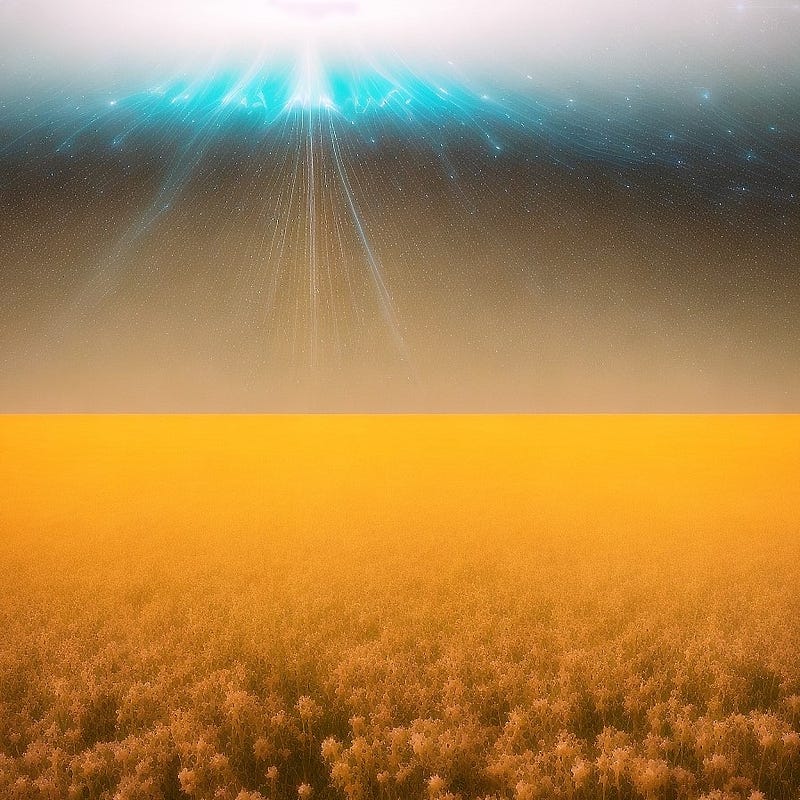
Strip away the mundane facade of your daily existence, and you're smacked with a revelation so audacious, it dares you to question the very fabric of what you consider real. Here's the unfiltered truth: every laughter, every sorrow, every mundane moment is ephemeral, a mere fragment in an advanced civilization's digital phantasmagoria. Your essence, my ruminations, the endless expanse of the cosmos? They're but pixels in a grand, elaborate digital mirage. This isn't just a thought experiment; it's the reality we've all been plunged into, wittingly or unwittingly.
Machine learning's ability to generate highly realistic simulations and environments presents a tangible example of how our own reality might be constructed. Algorithms capable of learning and adapting could be orchestrating every aspect of our perceived world, from the physics governing it to the narratives playing out in our lives, mirroring the concept of a simulated universe controlled by advanced AI.
Quantum computing shatters the boundaries of processing information, leveraging qubits that exist in multiple states simultaneously thanks to quantum superposition. This capability allows for simulating complex quantum phenomena, providing a glimpse into processing and understanding the universe in ways previously thought impossible. A quantum computer could theoretically simulate entire universes, lending credence to the notion that our own universe could be a simulation crafted by a civilization with access to such computational marvels.
Advances in neuroscience reveal how our brains interpret and construct the reality we experience. This understanding blurs the lines between a physically tangible world and one that could be digitally simulated, suggesting that our consciousness might not differentiate between the two. If our brains can be tricked into perceiving a virtual reality as real, what's to say we aren't already living in one?
Theoretical physics proposes the holographic principle, suggesting that the universe we inhabit could be a complex hologram — all the information contained within a volume of space represented on a boundary to that space. This concept aligns eerily well with the simulation hypothesis, suggesting our 3D existence might merely be a projection of information encoded at the cosmos' edge.
…But, wait. Sorry, I'm full of shit. My dive into armchair philosophy? Probably more entertaining than enlightening. Do I buy into this whole simulation theory? It's a mix of skepticism and mild intrigue. Neil deGrasse Tyson giving it airtime and a 50/50 chance makes it compelling, suggesting there's a sliver of possibility we're all extras in some cosmic production. The simulation theory marries scientific curiosity with philosophical speculation — it's neat and terrifying.
In this oscillation between belief and skepticism, between the conviction of our simulated existence and the acknowledgment of our tangible reality, we find ourselves at a crossroads. The path forward is not paved with definitive answers but with relentless inquiry. Whether our experiences are the product of complex algorithms crafted by an advanced civilization or the outcome of natural processes, the drive for meaning, for understanding, for truth, remains undiminished. Over all I give it 0–100% odds.
Whether we're living in a Matrix movie or just another chapter in the universe's unfolding drama, the quest for meaning is what carves our place in the leaderboard. What truly resonates is the audacity to question the very foundation of our existence — to peel back layers of perception and confront the abyss with a smirk. Let's embrace this existential rollercoaster. Either way, I'll keep an eye on it for you. You beautiful simulated soul you.
References
- Nick Bostrom's Original Paper: "Are You Living in a Computer Simulation?" — simulation-argument.com
- Wikipedia on the Simulation Hypothesis: en.wikipedia.org/wiki/Simulation_hypothesis
- Adam Stratmeyer's WordPress exploration: adamstratmeyerrethinkingnorms.wordpress.com